
Dublin Court Docket Searches
The Dublin Mayor’s Court posts its own court-information channel at mayorscourt.dublin.oh.us. Use that local Dublin route first for a city citation, ahead of any county database. The portal and the official court page carry what you need. That includes case information, a calendar, and payment links. A case number helps. A citation helps too. So does the court date. Those details are what the local clerk needs to route your question. Read any Dublin court records result against the citation or notice you actually hold.
Dublin runs a Mayor’s Court, not a CASE Network subsection. Keep a local search inside the Dublin channel. Wait until the clerk or the case record itself shows a transfer. Maybe the case was filed above the local level. Maybe it moved after filing. Either way, the receiving court holds the record from that point on. The issuing court on the ticket tells you where to begin a docket search. The city name alone does not.
- Open the Dublin court-information portal or official Mayor’s Court page.
- Use the Dublin citation or local case number to identify the case.
- Read the Dublin court date, case type, and status before taking action.
- Use the Dublin clerk to confirm a setting or a transfer.
- Search the receiving court only after the Dublin record identifies that route.
Note: An online result can locate a case. The clerk still maintains the official court record.
Dublin Justice Center Court Records
The Mayor’s Court works through the Division of Court Services. That division is at the Dublin Justice Center. The address is 6565 Commerce Parkway, Dublin, OH 43017. The local court phone is 614-410-4920. That counter and clerk route handles any known Mayor’s Court matter. For the court calendar, payment channels, court rules, case numbering, and transfer details, the official Dublin Mayor’s Court page is the source.
Dublin records need local context. The city’s normal session is Tuesday at 3 p.m. But it publishes separate blocks for Administrative License Suspension, pleas, pretrials, arraignments and miscellaneous hearings, and trials. A clerk can tell you where your case sits. It may be the general Tuesday session or a specific block. The annual court calendar comes out by December 1. The official Dublin court page also lists the Justice Center location and court-service information.
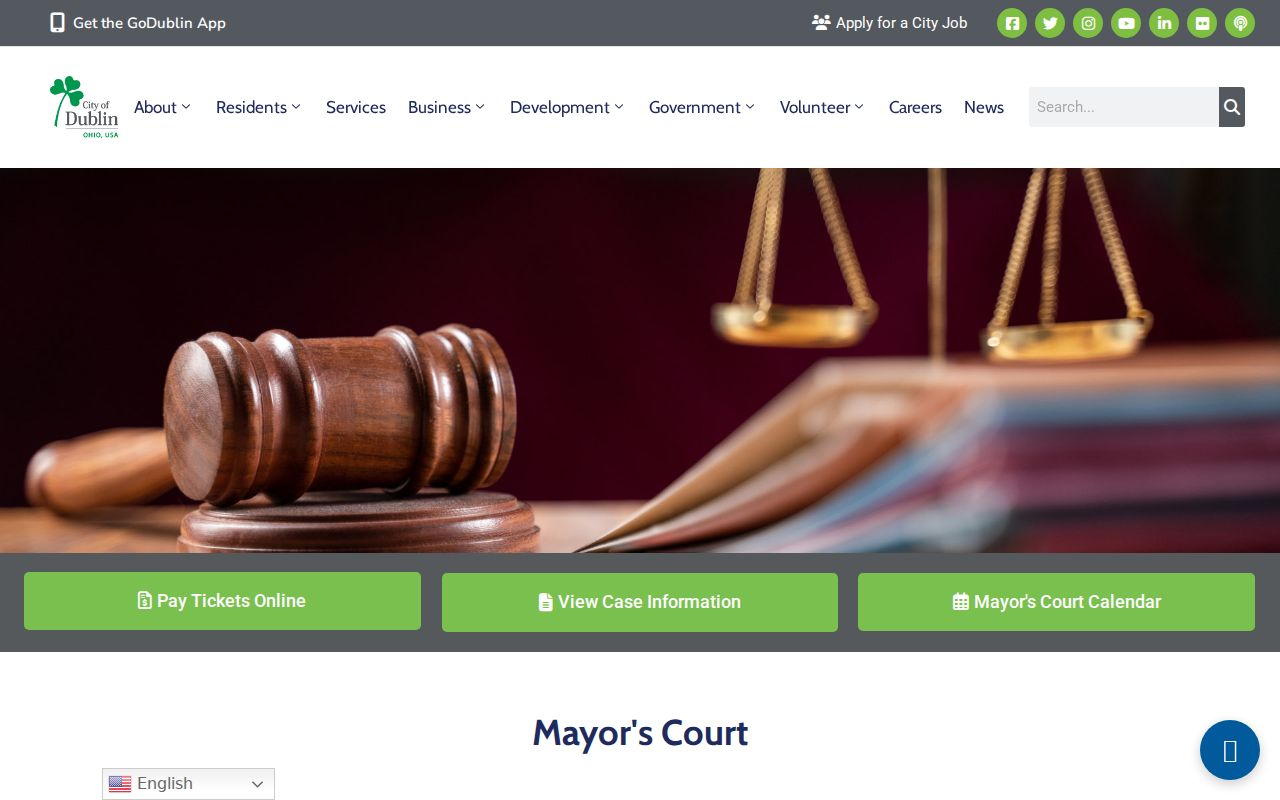
Once a Mayor’s Court case is located, Dublin readers can work through the local Court Services channel.
Inside the Dublin Municipal Court
Dublin Mayor’s Court hears its own qualifying local matters through the Division of Court Services. Dublin court records are most useful for local traffic, OVI traffic, criminal, and parking categories. Those categories carry Dublin’s own codes. The local court does not use Franklin County Municipal Court’s TR and CR patterns. Dublin’s own codes apply. Keep the citation and Dublin case number paired whenever you look up the local docket.
The Dublin schedule leaves a record trail more detailed than one weekly time slot. Administrative License Suspension sits at 1:30 p.m. Pleas run from 2 to 2:30, and pretrials follow from 2:30 to 3:15. Arraignments and miscellaneous hearings sit at 3. Trials sit at 4. Those blocks are the published normal structure. The actual setting for a case is controlled by the record itself and clerk confirmation.
| Local court | Dublin Mayor’s Court through Court Services. |
|---|---|
| Normal court day | Tuesday for Dublin settings. |
| Case number | Dublin year, type, and number format. |
| Court date | The current Dublin setting shown in local court information. |
| Transfer status | Shows whether a Dublin matter must move to another court. |
Dublin Court Codes and Records
Dublin numbers its cases by year, type, and sequence. TRD marks Dublin traffic, and TRC marks Dublin OVI traffic. CRB marks Dublin criminal. PPPP marks Dublin parking. A quick glance at the code tells you the category. Check it before you read the full record. Do not convert these into Franklin County Municipal Court formats.
The code helps you match a citation, portal result, payment route, and court date. It cannot tell you whether a case is payable, contested, or transferable. For an OVI or criminal question, the code is not enough. The full court record and the stated charge matter more. Dublin clerk direction matters too. When you contact Court Services, quote the exact Dublin numbering from the citation.
| Dublin code | Dublin record category |
|---|---|
| TRD | Traffic |
| TRC | OVI traffic |
| CRB | Criminal |
| PPPP | Parking |
Finding Dublin Court Dates
Dublin court dates live in the local Mayor’s Court schedule and case information. Sessions normally fall on Tuesday. Published time blocks split the local docket. Compare every result with the citation first. If a setting needs confirmation, call the Dublin clerk at 614-410-4920. Check a changed date in the current court record. Do not infer it from a general Tuesday schedule.
The city site links a live calendar plus online payment. The calendar shows the court’s planned session, while the case record supplies the case-specific setting. Under the 2026 Dublin cost schedule, a first continuance is free. A later one costs $10. That fee rule will not move a calendar entry by itself. The court and its stated process set the next date. For current court information, the official Dublin court-information portal is the local route.

The local portal is where a Dublin record, calendar, or eligible-payment question starts.
Dublin Tuesday Docket Settings
Dublin publishes a Tuesday calendar that runs on a set rhythm. The afternoon opens with Administrative License Suspension at 1:30 p.m. Pleas come next at 2, and pretrials follow at 2:30. Arraignments plus miscellaneous hearings sit at 3. Trials sit at the end of the day, set for 4. In a Dublin docket entry, a setting label shows the stage the court scheduled. That label never replaces the notice on your record.
What do these labels mean in practice? An arraignment is a first appearance before a judge. A pretrial is a case-management step held before trial. A trial, by contrast, is where disputed facts get resolved. Administrative License Suspension runs on its own separate calendar block. Not sure which label fits a particular case? Check the Dublin portal, the court calendar, or the clerk. Times vary. So a Dublin ticket should never be matched to this schedule by assumption.
Docket flow: Dublin citation › Dublin code and local case record › Tuesday setting › Dublin Court Services confirmation.
Dublin Traffic Ticket Lookups
A traffic ticket that names Dublin Mayor's Court belongs in that court's channel. Dublin takes payment in person, by mail, or online by card. Pay without contest on an eligible matter. Then the deadline is the court date printed on the citation. A mailed payment should include the signed citation. Add the payment and proof of insurance when required. Remember that a payment route never converts a contested or required-appearance case. It does not turn it into a pay-only one.
How much does it cost? The 2026 Dublin schedule lists a $94 traffic appearance in Mayor's Court. It also shows an $84 criminal appearance. A $50 sealing or expungement filing is on it too. A $100 warrant charge and a $20 warrant-block charge appear as well. Those are schedule figures only, and the exact amount tied to your citation controls. The court date on the Dublin record still drives both payment and appearance deadlines. For the wider picture, Franklin County traffic court records cover countywide traffic. Dublin's own ticket channels still come first.
Dublin Payment and Court Records
A payment receipt and a Dublin court docket answer different questions. Paying a fine settles the money. The docket still tells you the citation, the case number, the court date, and where the case stands. Dublin takes payments in person, by mail, or by card online. An online pay link is not a signal that your case qualifies. It does not mean a required hearing goes away.
Continuances have their own rules. The first one in Dublin costs nothing. A later one runs $10 under the city's posted schedule. A continuance must be approved by the court. So you cannot simply pick a new date and call it done. The local court record and a response from Court Services confirm it. Ask about installments or payments through the official Dublin channel, not a third-party records site.
The 2026 cost schedule sits on the official Mayor's Court page. Those figures can shift under the court's current rules.
How Dublin Cases Reach the County
Dublin cases do not stay in Mayor's Court forever. The court rules spell out the exit route. After a court trial, a written trial-de-novo request filed within 10 days moves the case to the proper municipal court. Dublin sits across Franklin, Delaware, and Union Counties. So the address on the citation, or the Dublin name itself, will not tell you which court takes the case.
Docket flow: Dublin Mayor’s Court › written Dublin transfer or appeal route › appropriate municipal court record, determined from the citation and clerk.
Once a local Dublin case lands in Common Pleas, the county record route changes. It is CIO, not the Mayor's Court portal. CIO serves the Franklin County Common Pleas divisions and appeals. It is not a substitute for a Dublin local-court search. Need more detail? The Franklin County court docket home walks through the county's separate record systems.
Dublin Three-County Court Records
Dublin crosses into three counties: Franklin, Delaware, and Union. That is the local reason to confirm any transfer court before assuming one. A Mayor's Court case can move to a municipal court after a trial-de-novo request. The Dublin city name alone never answers which one. The citation, the case file, and the Dublin clerk settle that question.
The same boundary fact shapes how you search. Skip the blanket county-name lookup and start with the local Dublin case number and portal. If the Dublin court reports a transfer, follow the receiving court named in the record or given by the clerk. A case filed at the higher level lives in that court's record system. It is not in a duplicate Dublin docket.
Note: Dublin's city boundaries do not fix court jurisdiction on their own. The issuing court and case location do.
Who Can See Dublin Court Records
Dublin court records sit under Ohio public-access rules plus the procedures each local court sets. The public Dublin docket is a good first stop. Use it to find a case, its setting, and what the court has done so far. It will not hand you every filed document, though. Sealed files, expunged cases, juvenile matters, and protected identifiers all stay out of view, so a Dublin public search can return less than the full file.
Once you have a case in mind, the local portal, the Court Services counter, and the phone line all work. A Dublin case number or citation speeds things up. The clerk can pull the right file at once. An online result can confirm a basic setting. For a record request, go to the court that keeps the original Dublin file. The same goes for a certified copy.
Key Rules:
Ohio Sup.R. 44-47 presumes public access to court records while providing exclusions and procedures.
Ohio Revised Code §149.43 addresses inspection and copying of covered public records.
Ohio Revised Code §2953.32 governs qualifying sealing or expungement of conviction and bail-forfeiture records.
Dublin Court Record Limits
A blank search result in a Dublin case lookup is not proof that a case never existed. Several things could explain it. The matter may sit in a different court, or it may have transferred out of Dublin. A new filing might not appear yet. A lawful restriction can also block public access to a court record. For any known matter, skip the guesswork. The local clerk and the actual court file beat an empty docket search.
There is also a difference between public case information and a certified record. The local portal gives you case details and, where eligible, a way to pay. A certified copy is different. Only the clerk who holds the file can issue that. So know which record type you need. Find the court with the case. Keep the Dublin citation number handy when you call the clerk about a court docket.
For city context, the 2020 Census puts Dublin at 49,328 residents. That whole-city figure describes the place, not who falls under any one court. The Census QuickFacts source is where the number comes from.
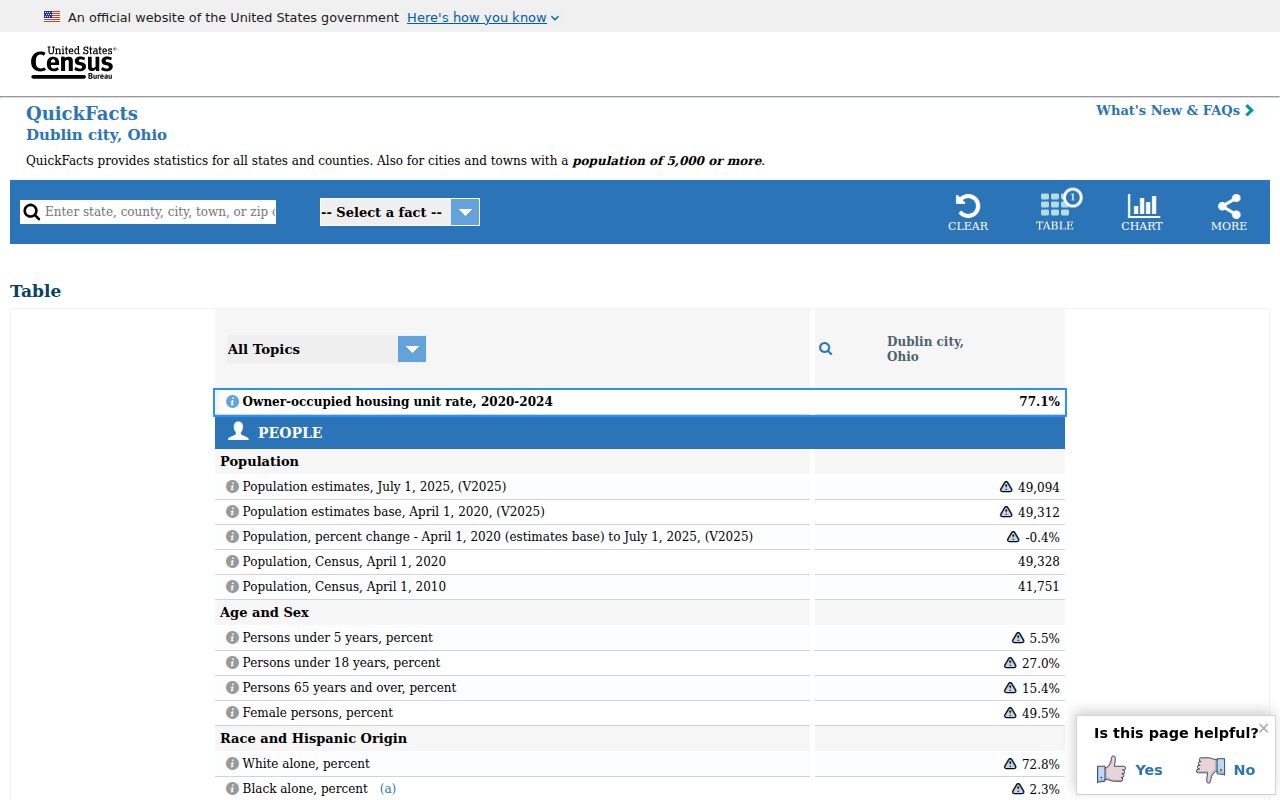
Dublin's population figure is context only, and it never replaces the court named on a ticket or the local record-routing process.